
Top 5 ways to make the most out of book reading with your child
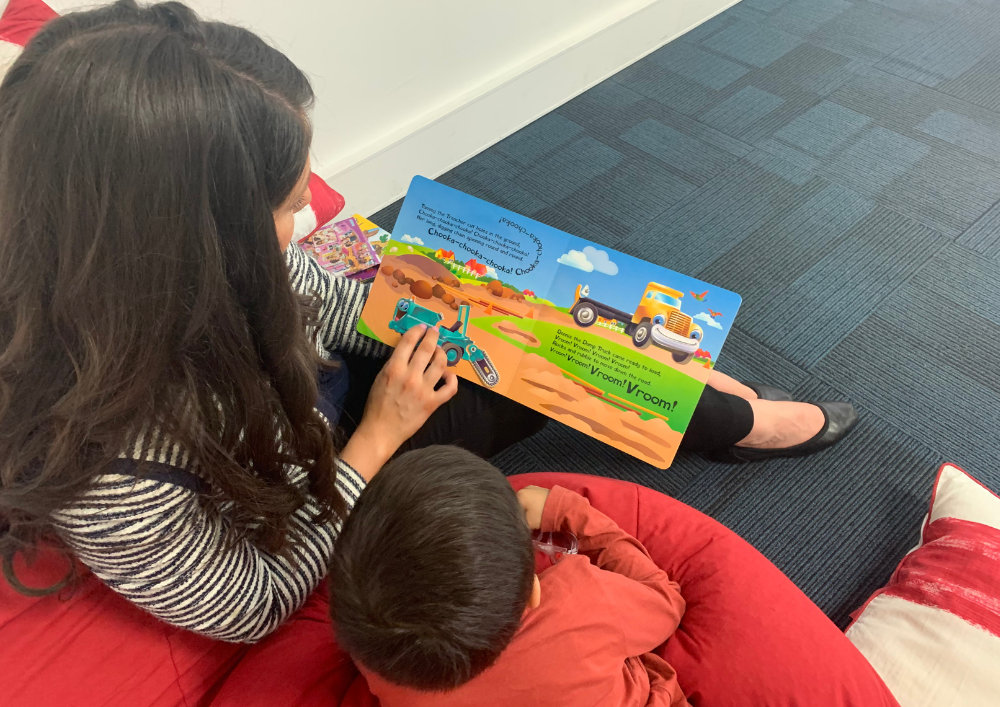
Anyone can simply read a book word-for-word to their child. But how can you make the most out of the time spent with your child to maximise their learning? In this post, I’d like to share my top tips on how to utilise shared book reading (reading together) that will not only make book reading more enjoyable for you as a parent, but also help to develop your child’s receptive language (understanding) and expressive language (expressing themselves).
But first, why target language through shared book reading?
Beyond the joy of cuddling up together in bed, turning the pages and exploring colourful illustrations, the benefits of book reading for children extend far beyond the immediate moment. Using this time to your advantage can help to increase your child’s:
Vocabulary (how many words they know and use)
Comprehension (understanding)
Inferencing (predicting, knowing why)
Attention (concentration)
Self-regulation (emotional development)
Pre-literacy skills (before learning to read & write)
Here are my top tips to make the most out of book reading
Tip #1 – Help them to learn a new word by focusing on it whilst reading the book
You can do this by:
Stressing the new word with your voice
Showing your child what the word means
Telling your child what the word means
Relate the word to your child’s own experiences
Say the word again
For example, if you were reading “Where’s Spot?” together and your focus word was ‘hiding’, you could say the word ‘hiding’ extra loud, look for Spot in the book for different places he could be hiding and recall earlier in the day when your child was hiding under their bed.
This will help them to learn the new word… and remember it!
Tip #2 – Bring your child’s awareness to the words on the page
Use your finger to trace along the words as you read them
This will show your child that you aren’t just making up the story in your head, but that the little crazy symbols (words) on the page are purposeful and help to develop correspondence between the written and spoken words
It shows them which direction words are written (in English, we write from left to write, up to down)
Being able to spot basic alphabet letters, such as the first letter of their name
Tip #3 – Ask engaging questions (not predictable ones!)
When asking questions during book reading, you want to make sure that they are:
Open-ended (no right/wrong answers, such as “where do you think they’re going?”, rather than, “do you think they’re going to the beach?”)
About things your child is interested in (not what you are interested in!)
Related to your child’s experience (such as, “can you think of a time when you felt this way?”)
Encouraging your child to think and to give an opinion
For example, if your child loves animals you might ask, “Why do you think the dog is in the middle of the road?”
This will expand their thinking and help them to engage on a deeper level.
Tip #4 – Expand the story
Instead of just reading the book word-for-word from the page, get creative. If you know that it’s your child’s favourite page, spend more time on that page and add some spice and detail to the story. You can:
Add in extra dialogue, an extra exciting event or an alternative outcome
Spend extra time looking at the illustrations and talking about them
If your child knows the story well, see if they can recall the story on that page
Suggest an alternative solution to the problem, to expand your child’s problem solving skills
Pause before turning the page, to give your child an opportunity to talk or make a comment before moving on
Tip #5 – Keep the conversation going, even after the book is finished
Why stop there? Even after the book is finished, you can keep the conversation going by:
Ask them to retell the story in their own words immediately after the book or at another time
Use props to make the story come to life, for example, you may get a witches hat and broom stick to discuss Room on the Broom
Engage in role plays by being different characters from the story with figurines or dress-ups
Think of different, alternative endings to the story (even if the ideas aren’t quite realistic, go with it!)
So there you have it. My 5 top tips for how to make the most out of book reading with your toddler, instead of just reading the same book, the same way, over and over. The seemingly simple act of reading a book can have immeasurable benefits. It goes beyond mere entertainment and becomes a vehicle for language development, cognitive stimulation, emotional intelligence, bonding, beginning building blocks for literacy skills, and so much more. Try one of the tips above and watch your child grow.
Who knows, you might be begging for a longer book time tomorrow too.